Rabu, 28 Februari 2018

78” KS9000 9 Series Curved SUHD Quantum Dot Ultra HD Premium HDR 1000 Smart TV

A Right perspective angle of Samsung TV with light detailed canyon onscreen image.

One Remote Control
You can now access and control your devices through voice recognition with our Premium Smart Remote which recognises the set top box, games console or alternative external device you have connected to your TV*.
Icon for smart hub
Gaming
Does your TV open up the world of console-less video gaming? Who needs a games console when you can access a wealth of video games in the cloud straight from your TV. Access a huge array of games without the need to invest in a console, play alongside your favourite stars and race against the best racing drivers directly through your TV.
Icon for smart view
Smart View
Connect & Share photos and videos and continue watching content from a variety of content partners including Netflix and Amazon Instant Video directly from your phone to your TV, whether this is an iOS or Android device, with a single press of a button.
Icon for auto detection
Auto Detection
Devices connected via HDMI cable will be automatically recognized and displayed as understandable icons and names on the screen. For added convenience Samsung One Remote Control works right away with no extra setup required.
*One Remote Control function requires Internet access and may not be available in all languages or areas.
*One Remote Control and Auto Detection function may not be supported by certain devices connected to Samsung Smart TV.

Selasa, 27 Februari 2018

Panasonic Releases Two New Lumix Cameras, Celebrates 10 Years Of Mirrorless Cameras


Panasonic is adding to its Lumix range with the Lumix DC-TZ220, the latest flagship in the travel zoom series and the latest G model, the Lumix DC-GX9.
The company is also celebrating 10 years since it released the first Digital Single Lens Mirrorless Camera, the LUMIX DMC-G1.
Paul Reid, Managing Director, Panasonic Australia says in the past 10 years the Lumix G series has had 30 cameras and 34 lenses.
The new Lumix DC-GX9 has a 20-megapixel digital live MOS sensor and Venus Engine processor. It also is equipped with a 5-axis dual I.S.technology combining 5-axis internal stabilisation with the optical image stabilisation in selected lenses. Panasonic says this system ensures stabilisation from wide angle to telephoto, allowing shooters to leave their tripod at home and travel light. In addition, the electromagnetically-driven shutter system provides quiet, steady shooting.
The GX9’s Live View Finder (LVF) offers 2,760K-dot equivalent resolution for clarity and sharpness when shooting. The 16:9 LVF tilts up by around 80 degrees and has a high magnification of 1.39x/0.7x (35mm camera equivalent). A Power Saving LVF feature extends battery life to up to 900 images per charge . To support intuitive control, the LUMIX GX9 introduces an exposure dial for quick change of exposure settings, and a focus lever for quick adjustment between AFS (AFF)/AFC and manual focus.
Panasonic says the GX9 has responsive and rapid autofocus at 0.07 sec; 4K Photo and Video; and Bluetooth Low Energy connection to smartphones.
It will be available in April in black or two-tone silver and black priced at $1,399

Apple May Launch Wireless Charging Pad Next Month


Recent reports reveal Apple could launch its new AirPower charging pad as early as March this year – capable of wirelessly charging several Apples devices at once.
According to 9to5Mac and Japanese tech website Mac Otakara, Apple’s new AirPower will launch this year, following the company’s announcement back in September 2017.
The new Apple AirPower is designed to charge up to three Apple devices simultaneously, without wires or cables.
With a large oval pad, the product claims to be large enough to comfortably support an iPhone X, iPhone 8/Plus or Apple Watch.
The Californian tech giant will also reportedly soon launch a second-generation of its AirPods wireless earphones

Amazon Is Making Custom AI Chips For Alexa


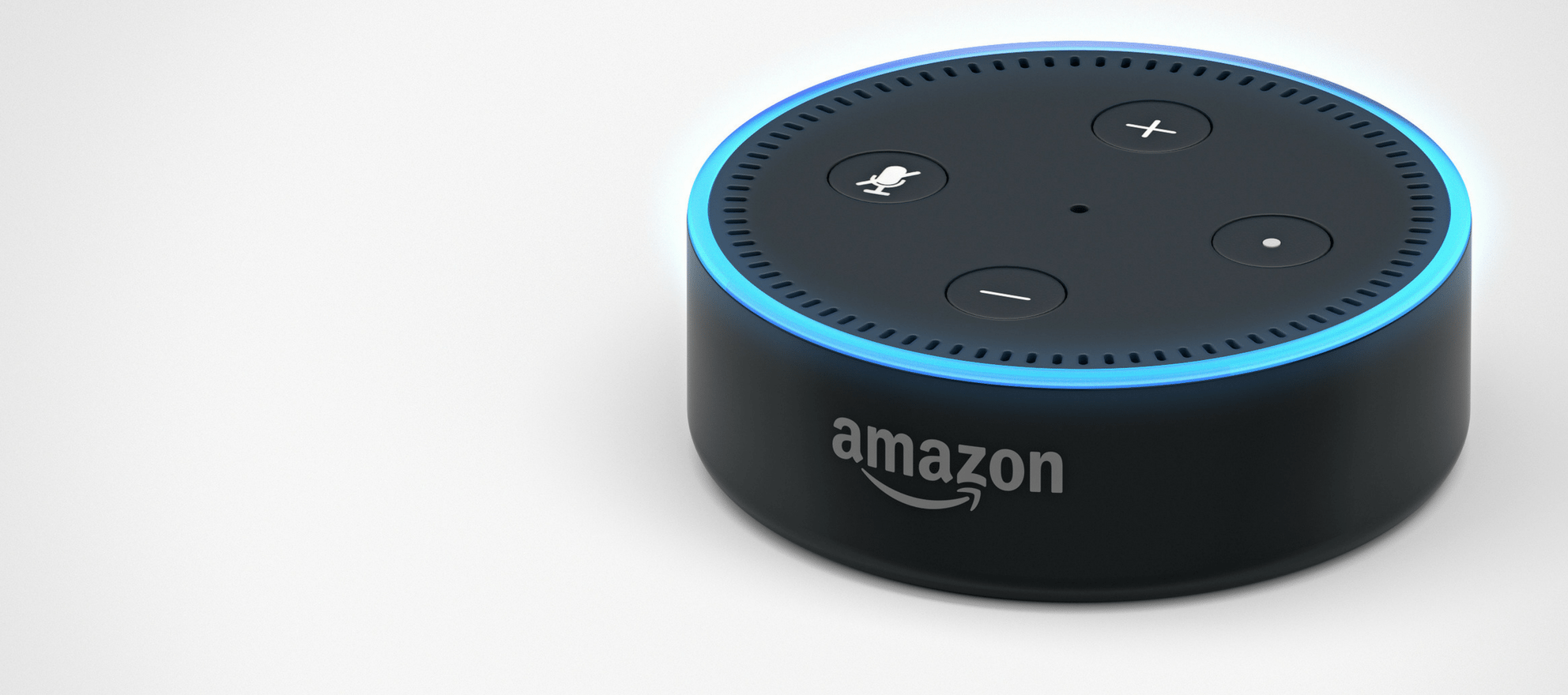
Amazon will be developing a custom AI chip to work on its smart speakers such as Echo and other products where Amazon Alexa is installed.
In a report by The Information, this new AI chip will allow Alexa-powered devices to respond quicker to commands by allowing more data processing to be handled on the device rather than in the cloud.
This move is similar to what Google and Apple have done in the past by creating their own AI chips to add another difference in the market. The Information says this move affects chip makers like Nvidia and Intel as its customers are now competitors.

When It Comes To Voice Commands And Music, Which Kit Is Best?


Who is the best at delivering great sound technology linked to Google Assist or Harman with their JBL range of Google voice enabled speakers.
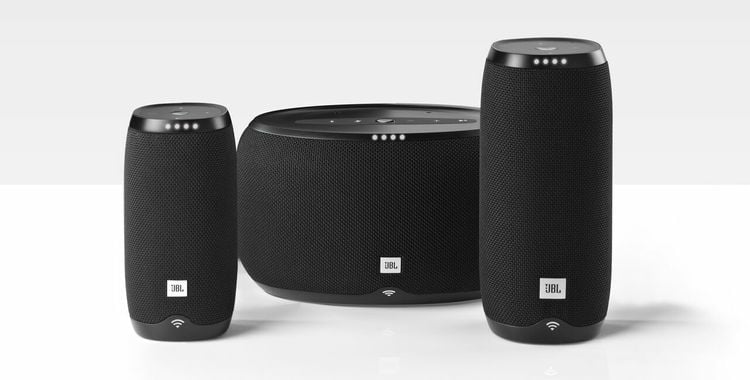
The new range of JBL Link products are designed specifically to deliver great sound while delivering voice management capability using technology developed by Google with their Google Assist.
While Google is great at delivering software such as Android, Chrome and their Google Assist technology I think they sould leave sound output to pro’s lioke Harman and JBL.
The dilemma for many music loving consumers is do I buy a base Google device or invest the added dollars in a third-party product like the JBL Link offering.
If you play music every day and want quality output the answer is the new range of JBL Link speakers. They not only deliver unique voice command capability via the likes of Spotify or Google Music, with a simple “Okay Google” command they deliver superior sound which is expected from a brand that has a reputation for delivering great sound from both Pro speakers to portable waterproof speakers.
All 3 of the Link models to the current JBL portable speaker designs.
Link 10 and 20 are both lightweight but still feel solid in the hand. The Link 300 has a subwoofer built in.
The JBL Link 10 and 20 are similarly styled with basically the same button placements.
Both are cylindrical with a mesh-type covering and solid top and bottom.
The power button and microphone mute button are on the back of both units along with the battery level indicator. At the bottom back of both the 10 and 20 is the MicroUSB charging port.
At the top of both units, you’ll find the Google Assistant button, volume/track buttons, play/pause button and Bluetooth/pairing button. There are also LED indicators at the top front for volume and at the bottom front for Wi-Fi connectivity.
The Link 10 is comparable with the Google Home in price, with better audio and a portable, rugged build.
The Link 300, is closer to the Google Home Max in size and works over Bluetooth and Wi-Fi, and provides a very balanced, enjoyable sound.
The Link 10 is priced at $229, the Link 20 is $299 and the Link 300 is $349.

Apple Could Be Working On Over-Ear Headphones


Apple is planning to release branded over-ear headphones as early as this year, according to reports from AppleInsider.
Known Apple leaker KGI analyst Ming-Chi Kuo says these headphones will be high-end with an all new design and should feature wireless connectivity.
Kuo adds the headphones will have better acoustic qualities than the AirPods. The headphones are expected to be more expensive than the AirPods which are currently selling for $159.
Apple will also be releasing updated AirPods later this year with an in-built Siri functionality. Apple is planning for the AirPods to be waterproof by next year.
Apple bought Beats headphones in 2014 for US$3bn.

Hisense & Sharp Bail On Legal Fight Over Dodgy Hisense TV Claims


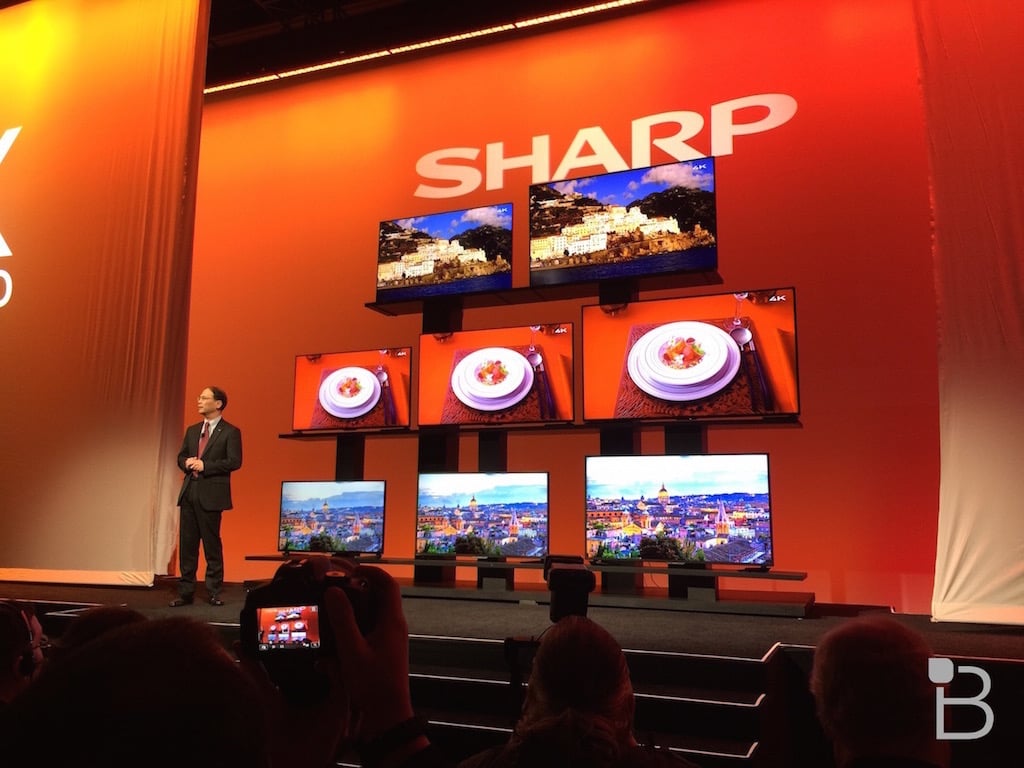
Japanese TV brand Sharp has dropped their legal action against Hisense after branding their TV’s low-quality TV’s with Sharp now set to return to global TV markets with a new 8K and OLED TV offering.
ChannelNews understands that following several meetings between the two Companies it has been agreed that Sharp will get their brand name back from Hisense immediately which will allow Foxconn, the new owners of Sharp, to start selling their TV’s in the USA later this year.
Hisense had licensed the Sharp brand name to stick on Hisense made TV’s after consumers in the USA and Europe rejected the Hisense brand.
Last year Sharp took legal action to block China’s Hisense Group Co Ltd from selling TV sets in North America under Sharp’s brand.
Since then Hisense has moved to license the Toshiba brand, they are also set to start selling Laser TV’s. They did this because they only had three years left on the Sharp license contract.
A Sharp spokesman has declined to comment.
Sharp cut back its overseas TV business and licensed Hisense to use its brand in the United States in 2015. It later sued the Chinese state-owned firm for putting the Sharp name on what it said were low-quality TVs.
In September, Sharp asked the U.S. International Trade Commission to probe certain Wi-Fi enabled devices and their parts after Sharp accused Hisense of infringing its patents.
In August 2017, Sharp, filed a lawsuit challenging a foreign gag order that Hisense had initiated that Sharp lawyers said prevented Sharp from talking about its own brand.
The dispute followed claims by Sharp that after the Japanese Company cut a licensing deal and sold one of its factories to Hisense, along with the rights to sell televisions under the Sharp brand in the North American market for five years.
According to Sharp, Hisense quickly lowered its manufacturing quality and started shipping sub-standard televisions under the Sharp brand. In April, Sharp, now owned by Taiwan-based Foxconn, said that it was terminating the trademark licensing deal.
Hisense filed a notice of arbitration with the Singapore International Arbitration Centre, which is the dispute resolution agreed upon by the parties in their licensing deal. In June, Sharp filed a lawsuit (PDF) in California state court seeking to terminate the licensing agreement.